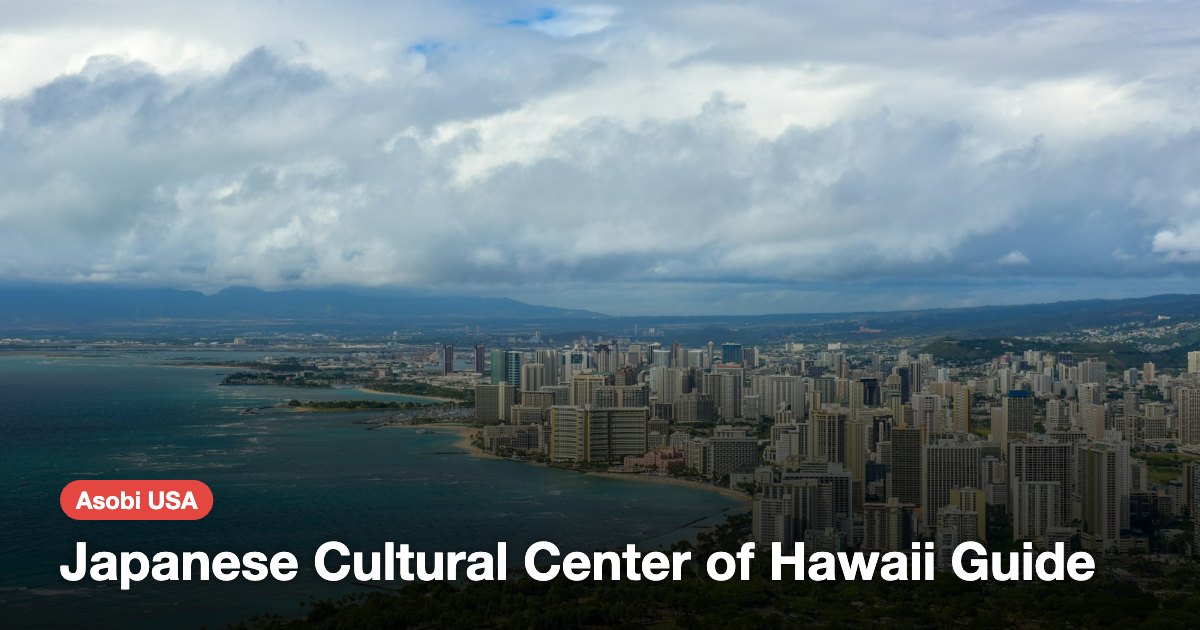
If you are planning an outing in Honolulu to learn about the connections between Japan and Hawaii, the Japanese Cultural Center of Hawaiʻi (JCCH) is worth considering. It is a place where you can see exhibits on the history of Japanese immigrants and look up events that introduce you to the culture.
The gallery, gift shop, resource center and activities such as tea ceremony are not all available on the same terms. This article covers the address, regular opening days, exhibit admission and the parts that require reservations separately.
What you’ll learn in this article
- The center’s location and the gallery’s regular opening days
- Admission to the Okage Sama De exhibit and the price categories by residency and age
- What to check when using the resource center, cultural experiences and parking
Information checked: October 15, 2026. We checked JCCH’s official visitor information, exhibit information and the announcements on its official website. All times are Hawaii local time. Closures, prices and event terms may change, so please check the official pages before you go.
Address and hours at a glance
| Item | Official information |
|---|---|
| Name | Japanese Cultural Center of Hawaiʻi (JCCH) |
| Address | 2454 South Beretania St., Honolulu, HI 96826 |
| Gallery and gift shop | Wednesday–Saturday, 9 a.m.–3 p.m. |
| Regularly closed | Sunday–Tuesday. Check official announcements for changes such as holidays |
| Resource center | By reservation |
| Phone | 808-945-7633 |
If you want to see the exhibits, it is important not to confuse the gallery’s hours with those of other businesses or offices in the building. When planning, check “days you can go to the center’s building” and “days you can visit the gallery” separately.
Tracing the history of Japanese immigrants at Okage Sama De
The official exhibit information describes Okage Sama De as an exhibit that shares the story of Japanese immigrants in Hawaii and the history and values passed down through the generations. It is a good starting point for learning about the people who came to Hawaii from Japan and the path their descendants have taken.
If you go with children, choosing just one topic before your visit, such as “Why is Japanese culture in Hawaii?” or “How do a family’s language and way of life change after moving?”, makes it easier to talk while you look at the exhibits. Rather than reading every panel in order, you can also use the visit to find a theme that interests you.
Check the current content of the exhibit on the official Okage Sama De page. If there are special exhibitions or rotations, the content may differ from older articles.
Gallery admission: separate rates for residents and visitors
Below are the prices for self-guided visits listed on the official page. Treat them separately from the prices for group tours and special programs.
| Category | General visitors | Kamaʻaina rate |
|---|---|---|
| Adults (18 and older) | $10 | $7 |
| Ages 6–17, students, 70 and older | $7 | $5 |
The center also lists free admission for JCCH members, free admission for children 5 and under accompanied by an adult, and $5 for active-duty military. Before visiting, check with the center about Kamaʻaina eligibility and the proof required, and how student and age categories are verified. Living in the U.S. does not necessarily mean the Hawaii resident rate applies automatically.
When planning a family budget, it is easier to keep track if you separate the costs of exhibit admission, parking, shopping and cultural experiences. If you join a special program, check before signing up whether it is included in general gallery admission.
Learning beyond the exhibit: Honouliuli Education Center
JCCH offers exhibits and educational programs at the Honouliuli Education Center about the wartime experiences of Japanese Americans in Hawaii. The starting point for looking up all current exhibits is JCCH’s official exhibit list.
With exhibits about historical events, choosing which parts to see based on your family members’ ages and interests makes the subject easier to engage with. Try including time to talk after the visit in your plans, for example by having kids take home words that caught their attention and look them up again at home.
Visiting the exhibits or the education center is not the same as visiting a separate historic site or joining a tour. If you want to combine your visit with sites outside the facility, check access and reservation requirements for those places separately.
Check how to use the resource center and tea ceremony and martial arts activities
Tokioka Heritage Resource Center is by reservation
According to the official visitor information, the Tokioka Heritage Resource Center is available by reservation. If you are visiting to research family history or the history of Japanese Americans, organizing your topics and materials before you get in touch makes it easier to explain what you are looking for.
Don’t assume you can do research on the spot as part of a regular gallery visit; find the right contact through the official visitor information. If you consult them about personal documents or family information, check for yourself how much to share and how it will be handled.
Choose tea ceremony and martial arts by the terms of each class or event
JCCH has information on the Seikōan Tea House and the Kenshikan Dōjō. If you want a cultural experience, look up the current classes, whether hands-on experiences are offered, target ages, the language used and how to sign up, one by one.
Having a tea house does not mean you can try tea ceremony that day without a reservation. If you want to fit it into a trip or a limited weekend, it is easier to plan if you choose one program whose date and time you have confirmed and leave extra time for getting around afterward.
Finding Japan-related events in fall 2026
When we checked, the JCCH official website posted a notice that Shichi-Go-San (a celebration for children ages 7, 5 and 3) will be held by reservation on Sat., Nov. 14, 2026. If you are considering taking part, check eligibility, availability and the conditions for the day on the JCCH official website.
This article does not list check-in times, prices or open slots that we could not confirm. Don’t assume that regular gallery admission or regular opening hours also apply to individual events such as Shichi-Go-San.
If you drive: parking is cashless
According to the official visitor information, JCCH parking is paid and accepts credit cards only. Check your payment method before you set out. Check parking rates and any validation-based rate categories in the official information or on the signs on site.
In addition to the time you spend inside, allow time after you arrive to find the building and entrance, so you are less rushed by the exhibit’s closing time. If you are attending a program you reserved, work backward from the time you need to reach check-in, not the time you arrive at the parking lot.
How to fit it into a half-day outing
- By the day before: Check the Wednesday–Saturday opening days and any announcements of closures or special events on the day you plan to go.
- Main purpose of your visit: Decide on one: seeing the exhibits or a program you reserved.
- Inside: Focus on the exhibits that interest you, and stop by the gift shop if you need to.
- On the way home: If you combine the visit with grocery shopping, buy refrigerated items last and check your route home.
If you are looking for places to shop, our guide to Japanese grocery stores on Oahu, Hawaii can help. If you are thinking about outings to explore Japanese American culture in other cities as well, see our guide to exploring SF Japantown.
Turning your visit into family conversation
After your visit, try taking time for each person to talk about an exhibit that left an impression or a word they learned for the first time. Connecting it to everyday topics, such as your family’s experience of moving, the Japanese you use day to day or your eating habits, makes the outing more than just a visit to a facility.
If you take photos or notes, respect the gallery rules and other visitors. If you want to look into materials in more detail, rather than extending your time on the spot, you can organize it as a topic for future research and consult the resource center.
Frequently asked questions
Can I visit the gallery on Sunday?
Under the regular schedule, the gallery is open Wednesday–Saturday, 9 a.m.–3 p.m., and closed Sunday–Tuesday. Special events and regular gallery visits have different conditions, so check the official information for the day.
How much is admission for Hawaii residents?
The official Kamaʻaina rate is $7 for adults and $5 for ages 6–17, students and those 70 and older. Check eligibility and the proof required with the center.
Can I just walk in and use the resource center on the day?
Officially, it is by reservation. We recommend organizing the topics you want to research and checking how to use it before your visit.
You might also like: Getting to the Honolulu Museum of Art (HoMA)
You might also like: 3 farmers markets on Oahu
Summary
The Japanese Cultural Center of Hawaiʻi is a good option for an outing to learn about the history and culture of Japanese immigrants. The gallery is normally open during the day Wednesday through Saturday, while the resource center and cultural programs have separate terms. Deciding on one goal and then checking exhibits, reservations and parking makes it easier to plan a half day.
Sources and references (checked October 15, 2026)
- JCCH: Visitor information, hours and parking
- JCCH: Okage Sama De and admission
- JCCH: Exhibits
- JCCH: Official announcements, including Shichi-Go-San
This article is also available in Japanese.