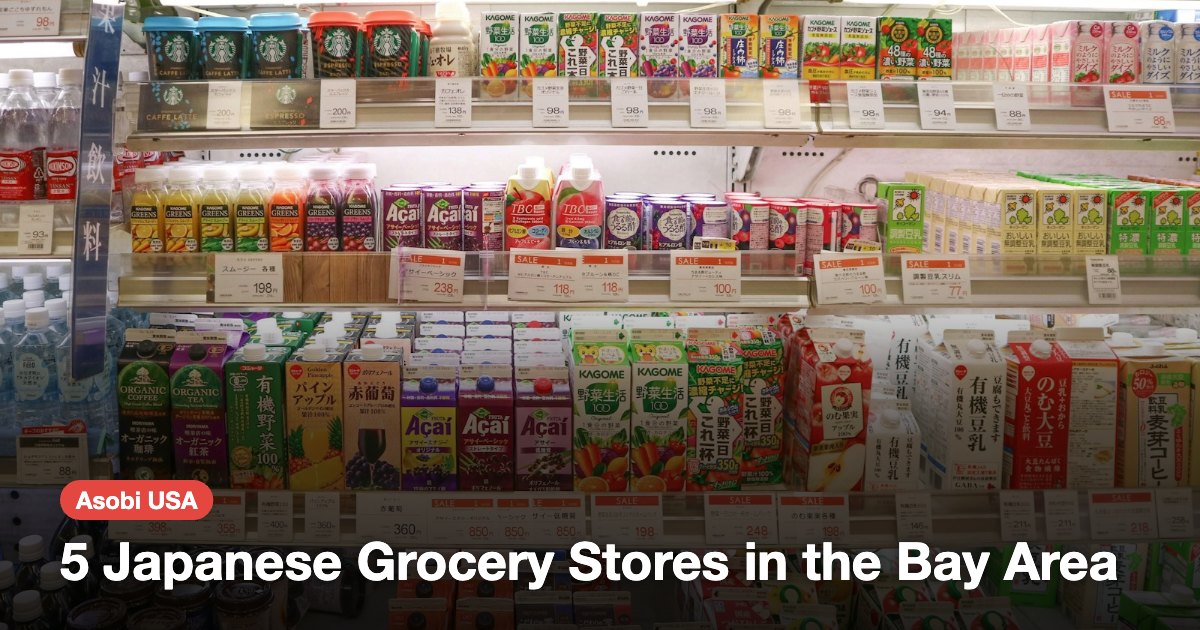
When looking for Japanese groceries in the Bay Area, it is more practical to choose a store that is easy to reach from your home, workplace and weekend routes than to start with the “famous” ones. San Francisco, San Mateo, Mountain View, Cupertino and San Jose are spread apart, and visiting several stores on the same day means carrying refrigerated items around for longer. In this article, we checked locations and regular hours on the official store pages and organized how to choose based on where you live and get around.
Information checked: October 16, 2026. Hours, product selection, tenants and holiday hours change. Be sure to reopen the official pages on the day you go. We have not treated past sale information or social media posts as current prices.
Locations and regular hours of the 5 stores
| Store | Address | Regular hours (as officially listed) |
|---|---|---|
| Nijiya San Francisco | 1737 Post St. #333, San Francisco | Daily 10 a.m.–8 p.m. |
| Nijiya San Mateo | 1956 S. El Camino Real, San Mateo | Daily 10 a.m.–9 p.m. |
| Nijiya Mountain View | 143 E. El Camino Real, Mountain View | Daily 9 a.m.–10 p.m. |
| Tokyo Central Cupertino | 19750 Stevens Creek Blvd., Cupertino | Daily 8 a.m.–9 p.m. |
| Mitsuwa San Jose | 675 Saratoga Ave., San Jose | Daily 9 a.m.–9 p.m. |
Nijiya’s official store list sometimes shows temporary hours alongside regular hours. The table in this article copies the regular hours, but on the day of your visit, give priority to any temporary notice at the top of the page. Events, stock and hours also change at Mitsuwa and Tokyo Central, so don’t just save the address in your map app; check that the store shows as open right before you leave.
In San Francisco, use Japantown as your base
Nijiya San Francisco is in Japantown on Post Street. Its location makes it easy to fit in if you want to restock seasonings, rice, noodles and frozen foods during sightseeing in the city or on your commute. If you are driving, don’t count on free parking dedicated to the store; check the entrance, rates and closing time of nearby garages on the signs there. On days you take public transit, matching how many frozen items and jars you buy to your trip home makes them easier to carry.
If you are combining it with a walk around the neighborhood, it is safest to finish your other errands first and buy refrigerated items last. For more on nearby sights, also see our San Francisco Japantown guide.
On the Peninsula, use San Mateo and Mountain View for different needs
The Nijiya stores in San Mateo and Mountain View are the same chain but have different locations and regular hours. A realistic approach is to use whichever is closer to your commute or school drop-off route for everyday shopping, and to call about stock only when you have a specific item in mind. Official information does not tell us which one “always has the bigger selection,” so we have not ranked them in this article.
Divide your shopping list into items specific to Japanese cooking and items you can also get at a regular supermarket. Start by looking for items with a clear purpose, such as miso, dashi, natto and thinly sliced meat, and compare things like milk and paper products with stores on your way home for price and quantity; that way you are less likely to walk back and forth through the store.
In the South Bay, Cupertino and San Jose
Tokyo Central Cupertino is on Stevens Creek Boulevard, and Mitsuwa San Jose is on Saratoga Avenue. There is no need to visit both on the same day. Decide whether you are buying bento, stocking up on groceries for the week or also looking at cooking tools, and we recommend trying the one store that best fits that purpose first. Tokyo Central’s official site notes that product stock varies by store.
Mitsuwa’s store page also lists special events, but limited-time items will not necessarily remain after an event ends. If an event is your only reason for going, match the dates with the participating stores, and don’t confuse event items with products in the regular aisles.
A shopping order that helps you avoid mistakes
- Write down the “essentials you’ve run out of” first, not a menu.
- Sort items into frozen, refrigerated and room temperature, and decide how much your cooler bag can hold.
- Pick the one nearest store and check its hours and transportation on the day.
- In the store, get the essentials first, and add new products only after deciding how you will use them.
- On days when you can’t put things away as soon as you get home, buy fewer refrigerated items.
Frequently asked questions
Can I shop using only Japanese?
This article does not guarantee which languages staff speak. Making a note of product names or photos, and adding the English names if needed, makes it easier to ask.
Are prices higher than in Japan?
It varies by product, size and time of year. Compare by unit price and by how much you can actually use up, not just the price tag.
Are the hours the same on Sundays and holidays?
Even if the regular hours are the same every day, holidays and temporary changes are separate. Give priority to the official listing on the day you go.
Official information and sources
- Nijiya Market store list (checked October 16, 2026)
- Tokyo Central store list (checked October 16, 2026)
- Tokyo Central Cupertino (checked October 16, 2026)
- Mitsuwa San Jose (checked October 16, 2026)
This article is also available in Japanese.