If you want to visit a Japanese garden around Los Angeles, where to go depends on whether you want to see just a garden in a short time or spend half a day that also includes a botanical garden or museum. In this article, we compare SuihoEn in Van Nuys, Descanso Gardens in La Cañada Flintridge and The Huntington in San Marino. All of them are “Japanese gardens,” but their size, closing days and admission procedures are not the same.
Information checked: October 16, 2026. Prices and hours change. On the day of your visit, recheck the official pages for temporary closures, weather-related closures and ticket conditions.
How to choose by purpose
| Venue | Best for | Things to note |
|---|---|---|
| SuihoEn | A quiet walk with the Japanese garden as the main goal | Open Monday–Thursday only; watch for rain closures |
| Descanso Gardens | Enjoying it together with several other gardens | The Japanese garden is one part of the grounds |
| The Huntington | Also touring art, the library and large botanical gardens | The grounds are large, so plan how much you walk |
SuihoEn: a 6.5-acre garden to visit on weekdays
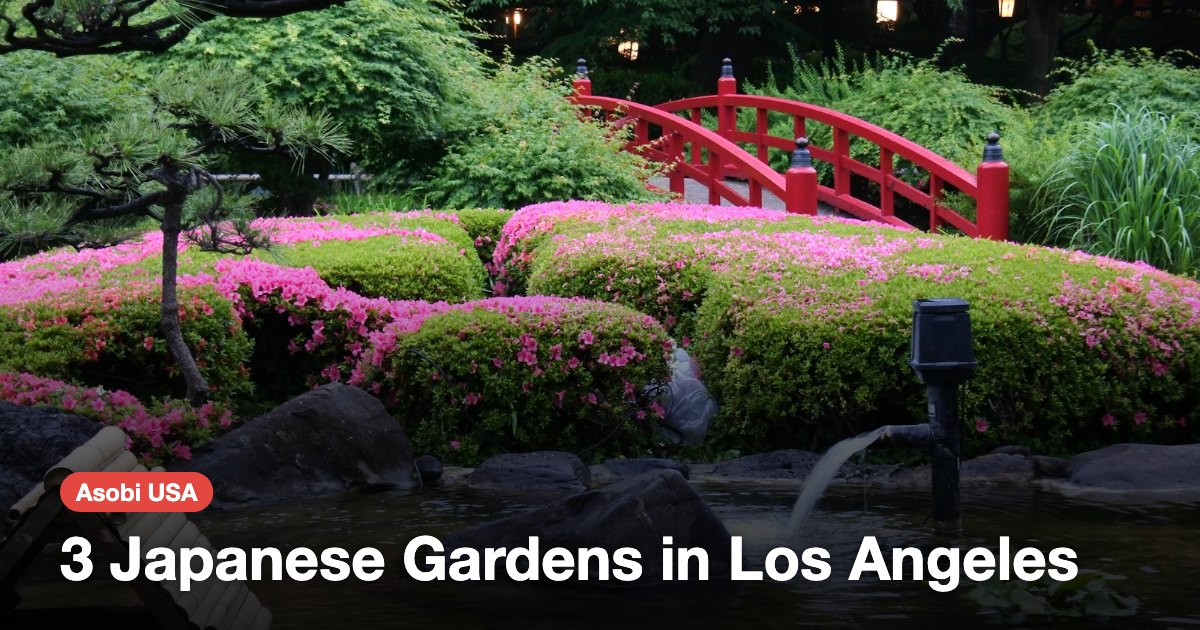
The Japanese Garden (SuihoEn) is in the San Fernando Valley, and its official site describes three areas: a dry garden (karesansui), a strolling garden and a tea garden. The address is 6100 Woodley Ave., Van Nuys. It is normally open Monday–Thursday 9:30 a.m.–3:30 p.m., with last entry at 3:15 p.m.; it is closed Friday–Sunday and on federal and City of Los Angeles holidays, and it also closes within 24 hours of rain.
The entrance is shared with the Donald C. Tillman Water Reclamation Plant, and according to the official information you need to check in with the security guard. So that you don’t drive past expecting a typical park entrance, share the address and entrance directions with everyone in your group. The admission listed on the official site is $5 for adults, $3 for ages 62 and up, and $3 for ages 3 and under, but recheck before you set out.
Descanso Gardens: work the Japanese garden into your visit
The Japanese garden at Descanso combines elements of a strolling garden, a pond garden, a tea garden and a dry rock garden (karesansui). It is located at 1418 Descanso Drive, La Cañada Flintridge. According to the official site, regular hours are 9 a.m.–5 p.m., it is open every day except December 25, and daytime parking is free.
The Japanese garden is not a separately ticketed attraction, so check its location on the map of the whole grounds before you start walking. Official prices are listed as $20 general, $14 for ages 65 and up and students, $8 for ages 3–12, and free for ages 2 and under. Conditions may differ for evening tickets to seasonal events.
The Huntington: a Japanese garden and cultural institutions in one visit
The Huntington is at 1151 Oxford Road, San Marino, and includes about 130 acres of botanical gardens, art museums and a library. Its Japanese Garden features a moon bridge, a koi pond and a historic Japanese house. The official site lists regular hours as 10 a.m.–5 p.m., closed Tuesdays.
Because the grounds are so large, it works well to make the Japanese Garden your must-see and add other areas depending on your energy and time. Parking is free, but the official site cautions that the lots can fill up on weekends and during busy periods. Considering the slopes and distances in the gardens and the heat, bring comfortable walking shoes and water.
Visiting with children or older adults
Don’t assume a garden visit will be short; include the walk from the parking lot to the entrance and from the entrance to the garden. For conditions that affect whether you can visit, such as benches, restrooms, steps and wheelchair routes, go to each venue’s accessibility information and check. On hot days, take more breaks in the shade, and avoid blocking narrow paths while taking photos.
Notes on photography
The rules differ between taking travel snapshots and shoots that use tripods, models or costumes. The Huntington allows personal handheld photography, but says portrait sessions require advance reservations, a fee and a city permit. At other venues as well, the same conditions do not necessarily apply to photography equipment or commercial use. If photography is your main purpose, check the rules in advance.
Sample half-day plan
- The day before, check the hours, weather and tickets.
- Choose a time right after opening or one that suits how you feel.
- Head to the Japanese garden first and accomplish your main goal.
- After a break, add one more garden or exhibit.
- Work backward from closing time and return to the parking lot.
If you plan to have lunch on site, check the restaurant’s hours and reservation conditions separately from the garden’s. On days when you want to avoid waiting for a meal, having a backup plan to eat nearby before or after your visit means you won’t have to cut into your garden time. Follow each venue’s rules on whether outside food and drinks are allowed and where you may eat.
Thinking about the seasons
Peak bloom times vary by year and weather, so there is no guarantee you will see the same scenery as in past photos. In spring, check bloom information; in summer, temperatures and shade; and in fall and winter, sunset times and hour changes due to special events. If you are traveling a long distance just for a particular flower, confirm with the official bloom information for that day or by contacting the garden.
Rather than ranking the gardens, the best approach is to choose the one that fits that day’s purpose and the people you are with. For another way to experience Japanese culture in central LA, see our JAPAN HOUSE Los Angeles guide, and for a neighborhood walk, our Little Tokyo guide.
You might also like: Getty Center: how to get there and reservations
Official information and sources
- The Japanese Garden: hours and admission (checked October 16, 2026)
- The Japanese Garden: directions and entrance (checked October 16, 2026)
- Descanso Gardens: Japanese Garden (checked October 16, 2026)
- Descanso Gardens: hours and admission (checked October 16, 2026)
- The Huntington: Japanese Garden (checked October 16, 2026)
- The Huntington: plan your visit (checked October 16, 2026)
This article is also available in Japanese.